
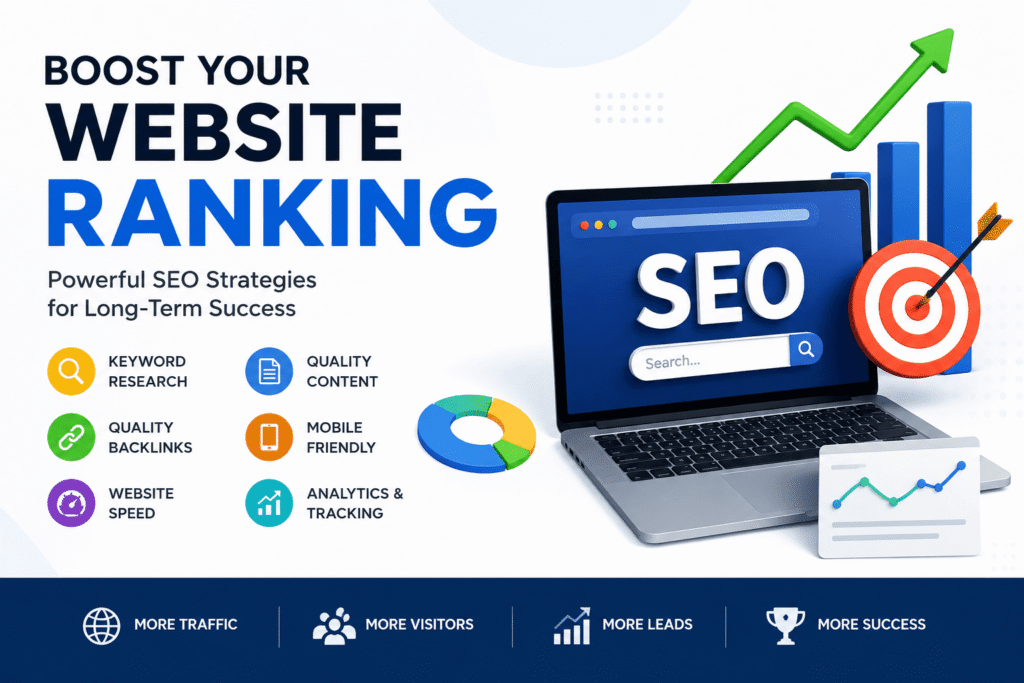
SEO
SEO (Search Engine Optimization) is the process of optimizing a website to improve its visibility in search engine results on platforms like Google. The goal of SEO is to attract more organic (unpaid) traffic by making a website more relevant, user-friendly, and search engine-friendly. It involves optimizing content, keywords, website speed, technical performance, and backlinks to achieve higher rankings. Effective SEO helps businesses increase brand awareness, generate quality leads, and achieve long-term online growth.
Introduction
Start the article by introducing Search Engine Optimization (SEO) and its growing importance in today’s digital landscape. Explain how millions of people use search engines like Google every day to search for products, services, businesses, and information. Discuss why simply having a website is no longer enough and why businesses need SEO to stand out in search results.
Mention that SEO helps websites attract organic traffic, improve online visibility, build trust, and generate qualified leads without relying solely on paid advertising. Briefly explain how search engines work by crawling, indexing, and ranking web pages based on relevance and quality.
End the introduction by giving readers an overview of what they will learn in the article, including the basics of SEO, its different types, ranking factors, best strategies, common mistakes, and the essential tools used by SEO professionals.
What is SEO?
Define SEO in simple yet professional language. Explain that Search Engine Optimization (SEO) is the process of improving a website’s visibility on search engine results pages (SERPs) through various optimization techniques. Clarify that the main objective of SEO is to attract relevant visitors who are actively searching for products, services, or information related to a business.
Describe how search engines like Google use bots to crawl websites, index pages, and rank them based on hundreds of ranking factors. Introduce key SEO concepts such as keywords, search intent, content quality, website structure, and user experience.
Also explain the difference between organic search results and paid advertisements, highlighting that SEO focuses on earning free, long-term traffic through quality optimization rather than paying for every click.
Why SEO is Important
Explain why SEO has become one of the most valuable digital marketing strategies for businesses of all sizes. Discuss how SEO helps increase organic website traffic, improve brand visibility, build customer trust, and generate high-quality leads. Mention that users generally trust websites that appear on the first page of Google more than those that appear lower in search results.
Describe how SEO provides a better return on investment (ROI) compared to many paid advertising methods because it delivers sustainable traffic over time. Explain how good SEO also improves website speed, mobile usability, and overall user experience, leading to higher engagement and conversion rates.
Include examples of how local businesses, e-commerce stores, startups, and service-based companies use SEO to reach their target audience and stay competitive in today’s digital marketplace.
Types of SEO
Begin by explaining that SEO consists of several specialized areas, each focusing on different aspects of website optimization.
On-Page SEO
Explain that On-Page SEO involves optimizing the elements that appear directly on a website. Discuss keyword optimization, title tags, meta descriptions, headings, URL structure, image optimization, internal linking, content quality, and readability. Mention the importance of creating valuable content that satisfies user intent.
Off-Page SEO
Describe Off-Page SEO as activities performed outside the website to improve authority and credibility. Explain backlinks, guest posting, digital PR, influencer outreach, social media sharing, brand mentions, and online reputation management. Emphasize that high-quality backlinks from trusted websites are one of Google’s strongest ranking signals.
Technical SEO
Explain Technical SEO by covering website speed, Core Web Vitals, mobile responsiveness, HTTPS security, XML sitemaps, robots.txt, structured data (Schema Markup), canonical tags, crawlability, and indexability. Mention that strong technical SEO ensures search engines can efficiently understand and rank a website.
Local SEO
Discuss Local SEO for businesses serving specific geographic locations. Explain Google Business Profile optimization, local citations, NAP consistency (Name, Address, Phone Number), customer reviews, and location-based keywords. Mention that Local SEO helps businesses appear in Google Maps and local search results.
Other Types of SEO
Briefly introduce E-commerce SEO, International SEO, Enterprise SEO, and Video SEO, explaining when each is useful and how they support different business goals.
Key SEO Ranking Factors
Explain that Google uses hundreds of ranking signals, but several factors have a greater impact on search rankings. Discuss the importance of publishing original, informative, and high-quality content that matches user intent.
Describe how keyword relevance, page speed, mobile-friendliness, HTTPS security, and Core Web Vitals influence both user experience and rankings. Explain why backlinks from authoritative websites increase trust and domain authority.
Mention internal linking, optimized images, structured data, user engagement metrics, website architecture, and content freshness as additional ranking factors. Emphasize that successful SEO is achieved by improving multiple factors together rather than focusing on just one.
Best SEO Strategies
Provide practical strategies that businesses can implement to improve search rankings. Start with keyword research using reliable SEO tools to identify valuable search terms. Explain the importance of creating high-quality, original, and informative content that answers users’ questions.
Discuss optimizing title tags, meta descriptions, URLs, images, and internal links. Explain how building high-quality backlinks through guest posting, digital PR, and content marketing strengthens website authority.
Mention regularly updating old blog posts, improving page loading speed, optimizing for mobile devices, targeting featured snippets, using schema markup, and tracking SEO performance through analytics tools. Conclude by emphasizing that SEO is a continuous process that requires regular monitoring and optimization.
Common SEO Mistakes
Highlight the mistakes that often prevent websites from ranking well on Google. Explain why keyword stuffing, duplicate content, thin content, and poor-quality backlinks can negatively impact SEO performance.
Discuss technical issues such as slow website speed, broken links, missing meta tags, poor mobile optimization, and incorrect indexing settings. Mention the importance of avoiding outdated SEO practices such as buying backlinks or over-optimizing anchor text.
Explain that regularly auditing a website and following Google’s best practices helps businesses avoid penalties and maintain strong search performance.
Best SEO Tools
Introduce the most popular SEO tools used by professionals to improve website performance.
Explain the purpose of:
- Google Search Console – Monitor indexing, search performance, and technical issues.
- Google Analytics 4 (GA4) – Track website visitors and user behavior.
- Semrush – Keyword research, competitor analysis, and site audits.
- Ahrefs – Backlink analysis, keyword research, and content opportunities.
- Moz Pro – Domain authority tracking and SEO recommendations.
- Screaming Frog SEO Spider – Technical SEO audits and website crawling.
- Ubersuggest – Beginner-friendly keyword research and SEO analysis.
- Yoast SEO – WordPress plugin for on-page optimization.
- Google PageSpeed Insights – Analyze website speed and Core Web Vitals.
Explain how these tools help businesses identify opportunities, fix issues, and continuously improve their SEO performance.
Conclusion
Summarize the key points discussed throughout the article. Reinforce that SEO is a long-term investment that helps businesses improve online visibility, attract targeted traffic, generate qualified leads, and build lasting credibility. Highlight that success in SEO requires a combination of high-quality content, technical optimization, strategic link building, and continuous performance monitoring.
Encourage readers to stay updated with Google’s algorithm changes and consistently apply SEO best practices. Conclude with a motivating statement that businesses investing in SEO today are better positioned to achieve sustainable growth, stronger brand recognition, and long-term success in an increasingly competitive digital landscape.